
Choose from the confirmed grade and form combinations
| Product option | Specification to request |
|---|---|
| Industrial white flakes | Industrial magnesium chloride hexahydrate specification, plus any flake-size requirements. |
| Industrial white powder | Industrial magnesium chloride hexahydrate specification, plus any powder-size requirements. |
| Food-grade white flakes | The separate food-grade flake specification and documents for the intended use and destination. |
This comparison covers the white refined products with a published minimum of 46% MgCl₂ in the hexahydrate, MgCl₂·6H₂O. Food-grade supply is white flakes; white powder is industrial grade. Light-yellow standard magnesium chloride is also available, with form, content and impurity limits confirmed by model.
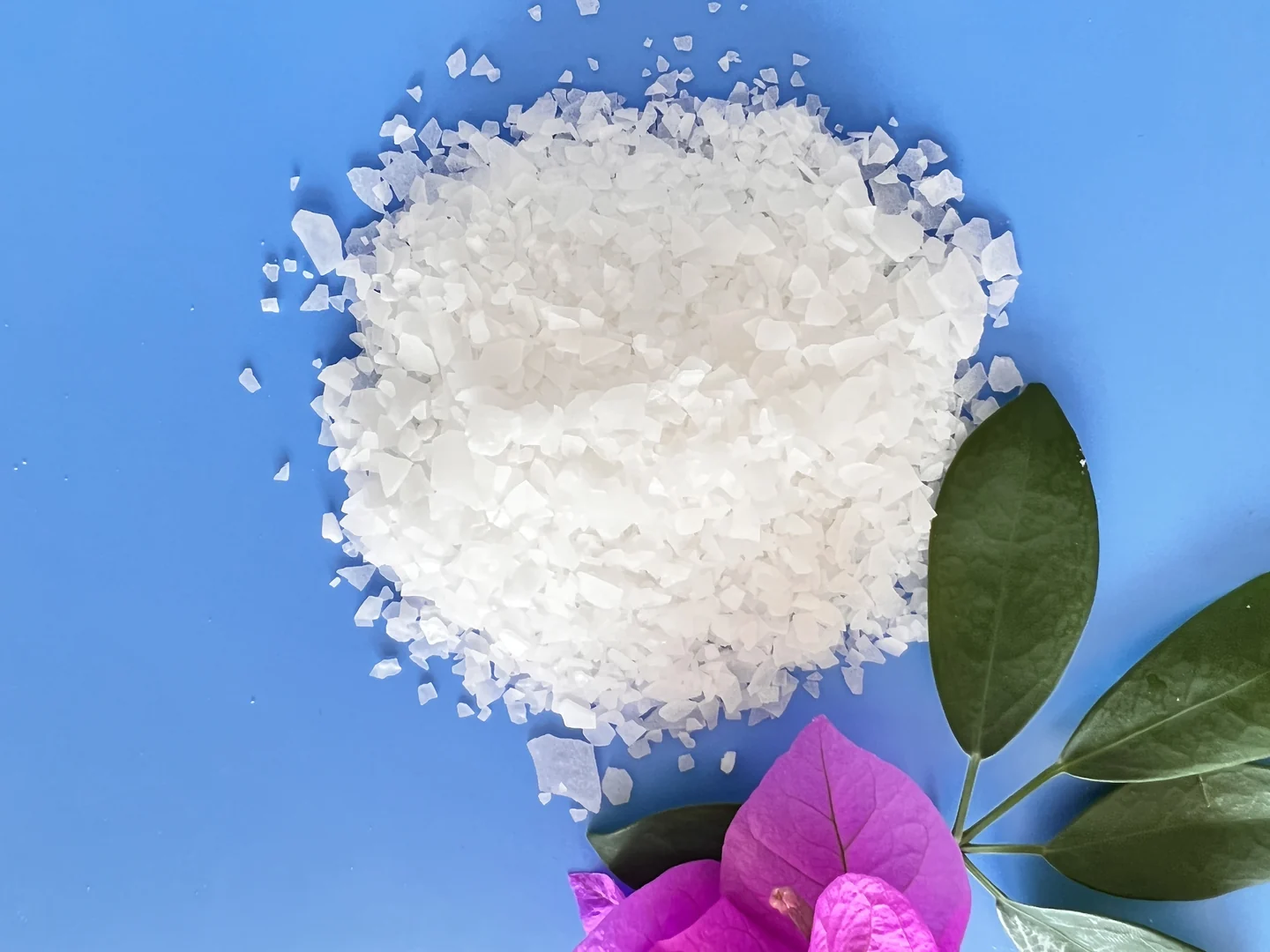
Match the form to the way you receive and use it
Describe how the material enters your process. A form that suits your existing receiving or feeding system may be the best starting point, but the order should still state any particle requirements. “Flakes” and “powder” are form descriptions, not measured particle-size specifications.
- Dry feeding or blending: identify the feeder, transfer method and any size or handling requirement. Evaluate a representative sample in your equipment.
- Solution preparation: provide the target solution concentration, preparation method and any insoluble-matter requirement. Confirm the selected product’s preparation instructions.
- Deicing or dust control: describe the intended use, site conditions and application equipment so the relevant form and specification can be reviewed.
If the process needs a defined particle-size distribution, state the required measurement or sieve basis in the inquiry. Do not infer a size guarantee from the sample photograph.
The same 46% content does not mean the same grade
TENORCHEM’s industrial table covers both white flakes and white powder. Food-grade white flakes have a separate table. Compare the specified impurity limits and intended use, not just the MgCl₂ percentage or white appearance.
For example, the industrial table includes alkali metal chlorides, while the food-grade table also lists lead, arsenic and ammonium limits. An omitted parameter does not mean the substance is absent. If your process needs an additional limit or test, include it in the agreed specification.
The magnesium chloride product page contains the current numerical limits for each grade. For a food-processing inquiry, provide the intended use and destination so the appropriate specification and documents can be reviewed.
Choose a pack you can keep protected from moisture
The confirmed packing options are 25 kg bags and 1,000 kg big bags. Consider consumption between deliveries, receiving equipment and how an opened pack will be closed or emptied. Store the product in a cool, dry, well-ventilated place and keep packaging tightly sealed.
Confirm lining, bag material, label language and pallet preference with the order. Our 25 kg bags vs big bags guide explains the handling and order-planning questions shared across these formats.
Write an order description that avoids ambiguity
Example inquiry: “Magnesium chloride hexahydrate, industrial grade, white flakes, MgCl₂ ≥46%, 25 kg bags. Please confirm the full specification, particle requirements, lining, pallet arrangement and documents for our application.”
For food-grade supply, request food-grade white flakes explicitly and add the intended use and destination. For industrial powder, change the form and include any powder-size requirement. Finish the brief with quantity and destination, then confirm the TDS, SDS and representative COA for that product.