
25 kg bags and big bags compared
| Decision | 25 kg bags | 1,000 kg big bags |
|---|---|---|
| Receiving and use | Discuss smaller pack handling, batch use and onward distribution | Confirm suitable lifting and discharge equipment at the receiving site |
| Pack count for 1,000 kg net | 40 bags at 25 kg each | 1 bag at 1,000 kg |
| Once opened | Each opening exposes a smaller quantity | Plan how the full pack will be discharged or protected between uses |
| Storage planning | Confirm stack, pallet and aisle requirements | Confirm the bag design and storage arrangement with the supplier |
| Order details | Bag material, lining, closure, print and pallet arrangement | Bag design, lining, filling / discharge arrangement and lifting requirements |
A 1,000 kg big bag is often described as a jumbo bag or FIBC. The pack-count comparison above is arithmetic only: it does not establish a lifting method, stacking limit, container payload or lower total cost. Use the approved packaging instructions and site handling procedures.
Packing options by product
| Product | Current packing information |
|---|---|
| Calcium chloride | 25 kg and 1,000 kg; PP / PE bags, pails, drums and private labels discussed by order |
| Magnesium chloride | 25 kg bags and 1,000 kg big bags; grade and form confirmed separately |
| PAC powder | 25 kg bags; confirm any alternative format before ordering |
| Dry PAM | 25 kg PE-lined kraft bags; custom packing discussed by order |
| Liquid PAC | 1,000 L IBCs; confirm net weight for the selected liquid model |
The links below lead to each product’s confirmed packing and specification information. Alternative packing is agreed for the selected product; a big-bag option for one chemical does not establish availability for every product.
If the product form is still undecided, compare magnesium chloride flakes and powder before finalizing the pack. For other bagged chemicals, check the aluminium sulfate, deicing salt or magnesium sulfate heptahydrate product page for available pack sizes.
Labels and net weight
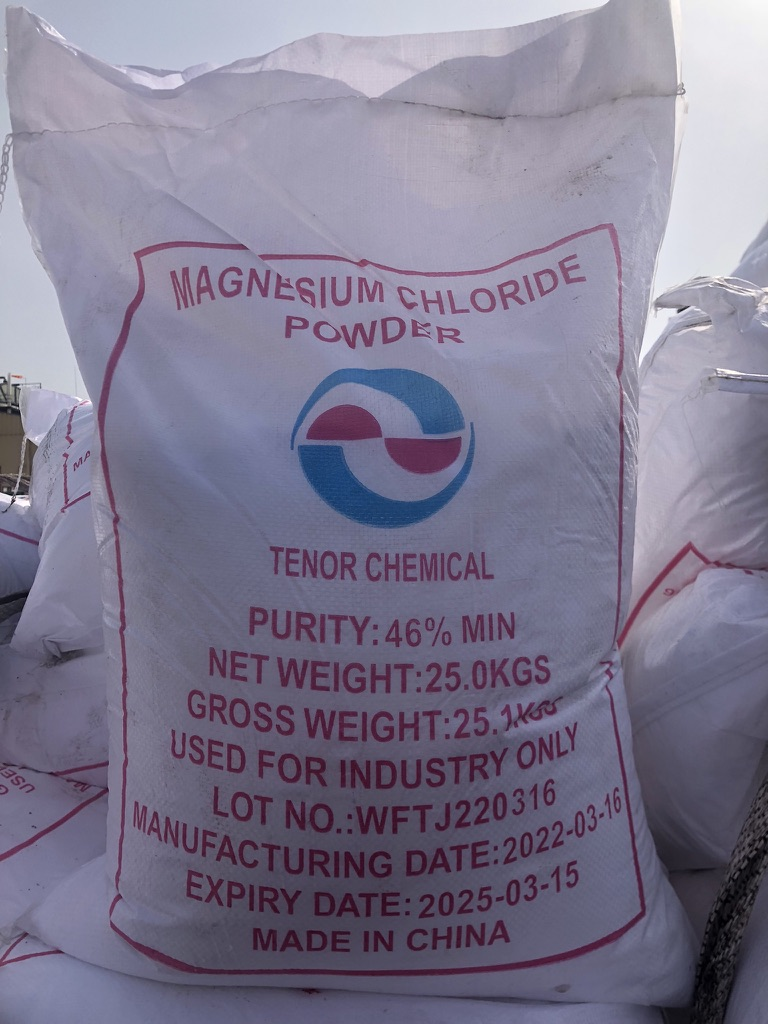
Provide the product name, grade, content description, required language, net weight and any approved artwork. Confirm batch identification and the information required for the product and destination before the label is finalized.
Keep product identity and content wording precise. For example, 46% magnesium chloride describes MgCl₂ content in the hexahydrate product; PAC content is expressed as Al₂O₃; PAM solid content is not the same as a purity claim. A private label should reflect the agreed specification.
Check net and gross weights separately. Net weight describes product only; gross weight includes packaging. Pallets and other transport materials must also be accounted for in the final loading documents.
Pallets, storage and container loading
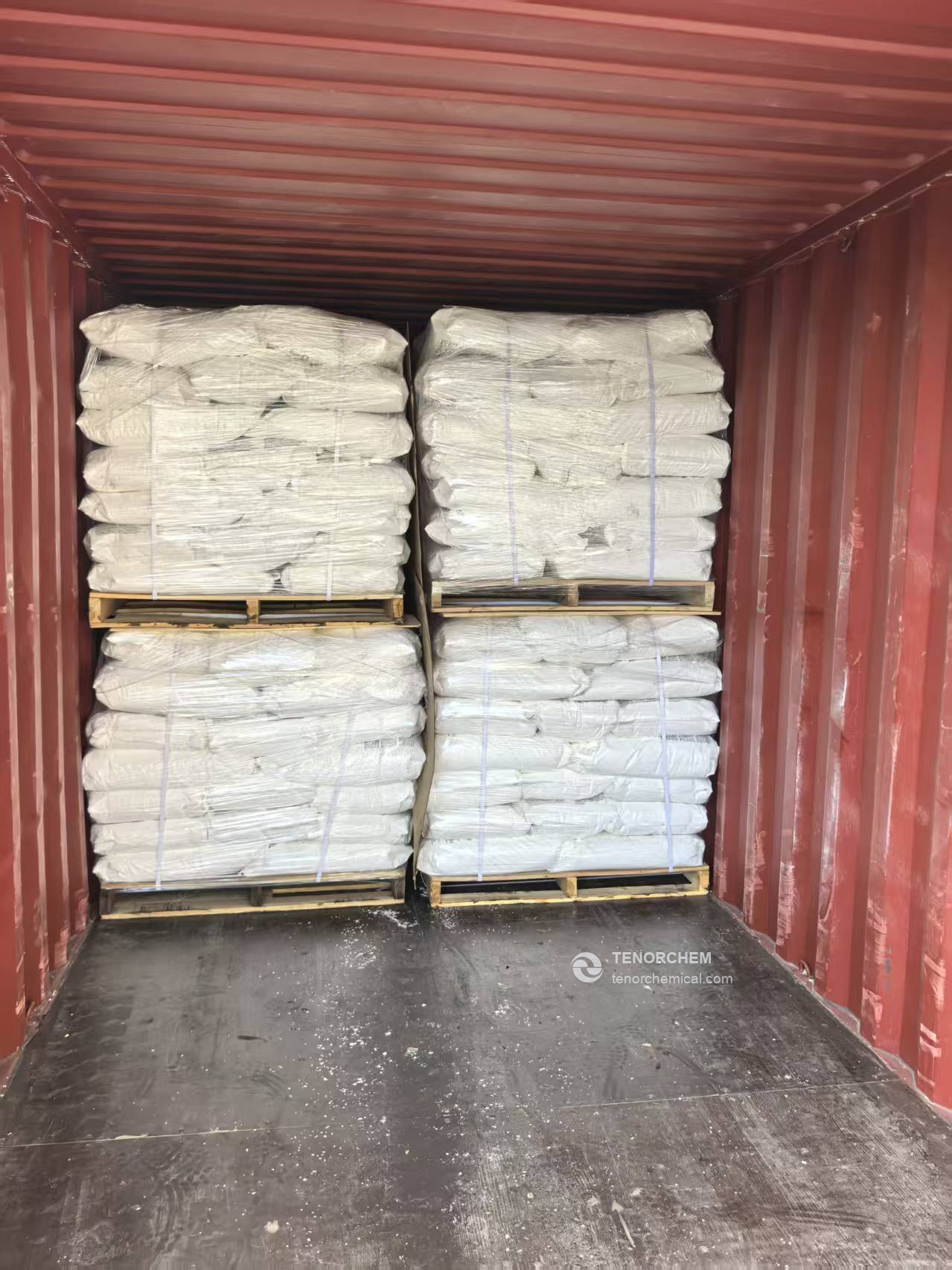
TENORCHEM can discuss palletized and unpalletized supply. Include the destination, receiving arrangements and any pallet requirements in the inquiry. Confirm lining and closure details against the selected product’s storage instructions.
Request an order-specific loading plan: container quantity depends on the product, packing and transport limits. The photographs show previous shipments.
A packing brief to include with your inquiry
- Product, grade, physical form and required specification.
- Preferred net weight, packaging material, lining and closure.
- Receiving and discharge equipment, storage conditions and pallet preference.
- Label language, artwork and destination-specific requirements.
- Order quantity, destination country / port and requested delivery timing.
For PAC or PAM, also identify the selected model or the treatment process being evaluated. See the PAC and PAM selection guide for the technical information to provide alongside the packing brief.