
Start with the result your process needs
Identify the water source and treatment stage, the current coagulant and the problem to improve. Include available analysis, process pH, mixing and separation equipment, and any downstream water-quality or sludge-handling requirements.
Make the target measurable where possible. For a clarification problem, describe the current treated-water result and desired improvement. If settling or sludge handling is the constraint, include those observations as well. An industry name on its own gives too little information for a useful PFS recommendation.
Read the quotation on a consistent basis
| Parameter | What to confirm |
|---|---|
| Iron content | The quoted total-iron requirement, its test basis and the selected solid model. |
| Reducing substances | Keep this parameter, expressed as Fe²⁺, separate from total iron. |
| Basicity | The proposed grade, its limits and the method used for comparison. |
| Impurities | The complete model specification, including insoluble matter and relevant trace-element limits. |
Our solid PFS product page provides selected reference limits from GB/T 14591-2016. Use those to frame the specification discussion, then request the model’s full TDS and a representative COA. The reference table does not establish the measured results of a supplied batch.
If two quotations use different iron descriptions or omit test conditions, resolve those differences before treating the prices as comparable.
Compare models under recorded treatment conditions
Agree the candidate models and preparation instructions before testing representative water. Record the sample code, feed analysis, solution preparation, dosage with units, addition sequence, mixing and settling conditions. Keep the current coagulant as an identifiable baseline in the record.
- Water result: record the same treated-water measurements for each candidate and compare them with the treatment target.
- Settling: document the observation time and settling behaviour rather than recording only a visual impression of the flocs.
- Sludge: note the amount and handling performance relevant to the plant’s existing solids-management process.
Make clear whether a dosage refers to supplied solid product or prepared solution. Include the solution concentration when reporting a liquid volume. A trial record without that basis can make two model results look comparable when they are not.
When PFS is being compared with PAC
PFS is iron-based and PAC is aluminium-based. Their headline content parameters—total iron for PFS and Al₂O₃ for PAC—are different measurement bases. Comparing those percentages directly does not tell you which model will treat your water more effectively.
Compare the selected models by the required water quality, dose, settling and resulting sludge under the documented trial conditions. Include preparation and supply arrangements when reviewing the practical cost. Keep the PAC model specification alongside the PFS specification in the evaluation.
If a polymer is also used, identify its model and addition conditions separately. The PAC vs PAM guide explains the distinction between coagulant and polymer roles; it does not replace a PFS trial.
Keep the trial model and supplied product connected
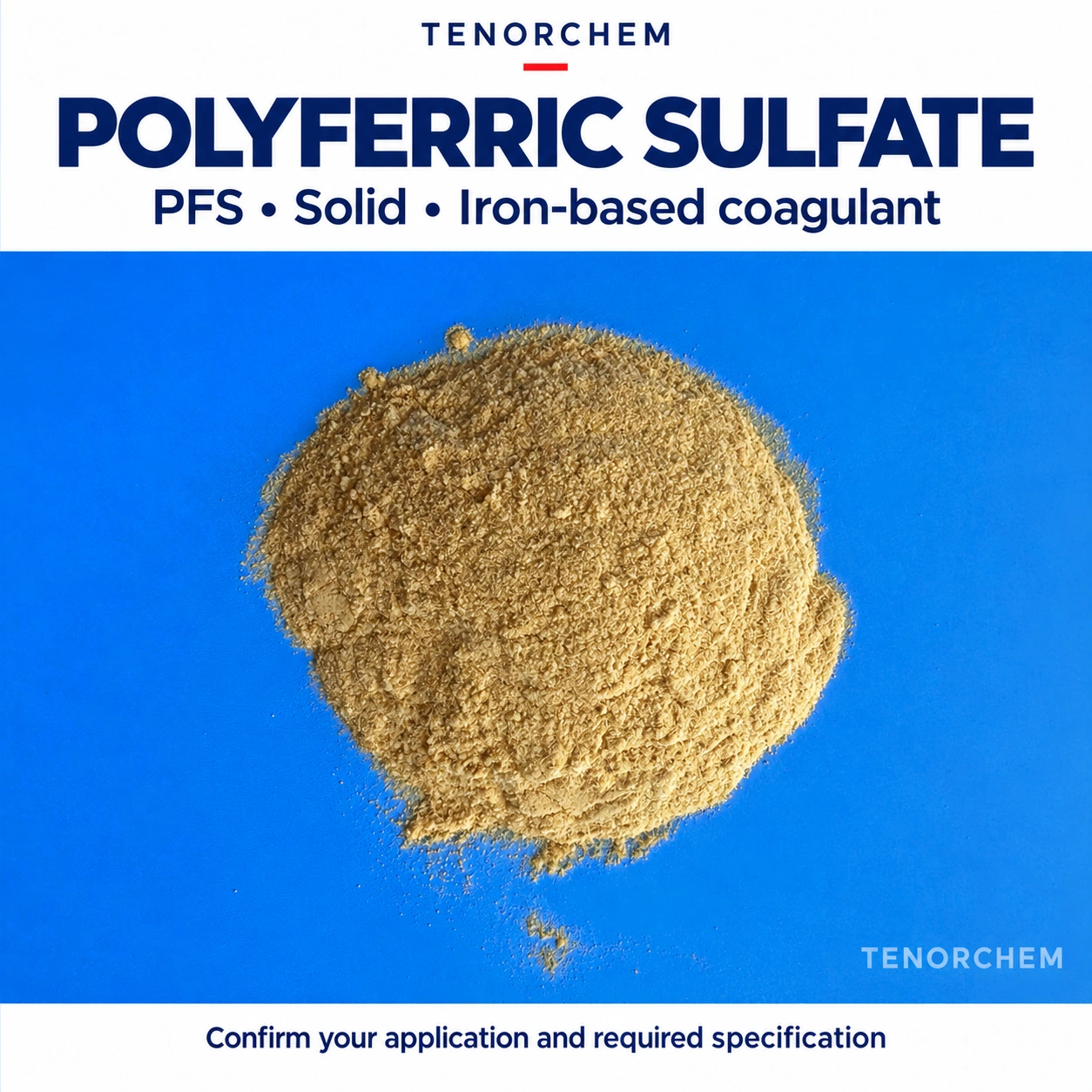
Send the trial record, selected model, required specification, trial or bulk quantity and destination. Confirm the matching TDS, SDS and batch-COA requirements before supply.
The confirmed packing is 25 kg woven bags with a PE inner liner. Agree pallet and label requirements for the order. Keep bags closed and protected from moisture, and follow the selected product’s SDS for storage and handling.