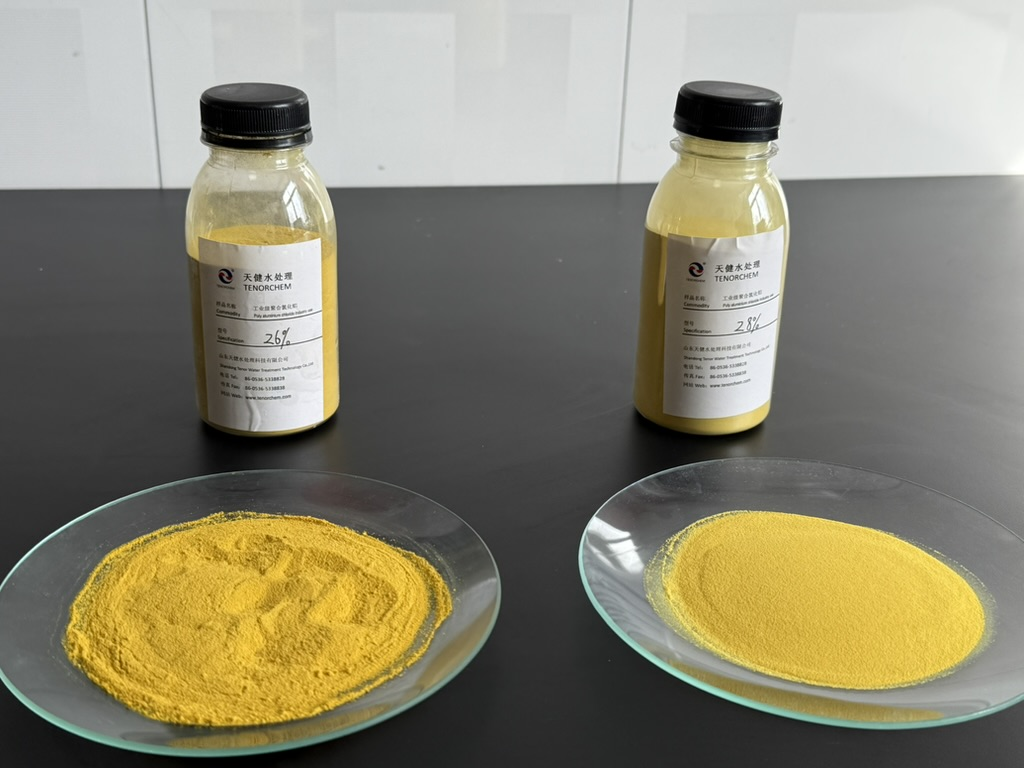
Industrial PAC samples labelled 26% and 28%. Colour is not a substitute for the product specification.
Also known as polyaluminium chloride, poly aluminum chloride, polyaluminum chloride and PAC.
Annual production capacity: 100,000 tonnes. Factory capabilities ↗
Compare grades & specifications
Choose industrial or drinking-water grade, then powder or liquid. Each grade page lists the relevant model limits and selection requirements.
| Product family | Range & form |
|---|---|
| Industrial powder | 26%–31% grades · Yellow / dark yellow powder |
| Drinking-water powder | 28–30% grades · White / light yellow powder |
| Liquid PAC | Industrial: 8–13%; drinking water: 8–18% · Grade-specific liquid specifications |
Industrial PAC powder is available in 26%–31% Al₂O₃ grades. Content ranges describe different models; the minimum content guarantee and other limits are confirmed in the selected model’s specification.
Industrial PAC Powder
Industrial wastewater and process-water coagulation.
Drinking-Water PAC Powder
White and light yellow models with separate basicity and iron limits.
Liquid Poly Aluminium Chloride (PAC)
Separate industrial and drinking-water liquid specifications.
Applications
Textile, paper & industrial wastewater
PAC coagulants for textile and dyeing effluent, paper-mill wastewater and other industrial streams. Share colour, turbidity and process data to compare models in a jar test.
Mining & metallurgy
For coagulation in mineral-processing and metallurgical wastewater treatment. Review suspended solids, process pH and the required treated-water quality when selecting the grade.
Oilfield & industrial process water
Options for produced water, oilfield reinjection-water treatment and industrial circulating-water pretreatment. Specify the water chemistry, treatment stage and downstream requirements.
Drinking-water & process-water treatment
Drinking-water-grade powder and liquid options for municipal and rural supply and food or beverage process-water treatment. Confirm the model documents and destination requirements for the intended use.
How to select a PAC model
1. Describe the water source, treatment process and target water quality. Include pH, turbidity and other available raw-water data.
2. Choose industrial or drinking-water grade, and powder or liquid. Share required Al₂O₃ content, basicity and impurity limits.
3. Evaluate the proposed model in a jar test using your water. Confirm the grade and working dosage before placing a bulk order.
4. For a quotation, add the quantity, destination, packaging, pallet preference and required documents for the selected model.
Laboratory support for PAC selection
Our three laboratories support analysis, product testing and development for specific water-treatment requirements. Discuss grade selection and your trial results with our technical team before and after supply.
Water-treatment field experience
TENORCHEM’s visit to an overseas customer’s wood-processing plant focused on wood-cooking wastewater treatment. View the site visit and technical exchange ↗
Packaging & supply
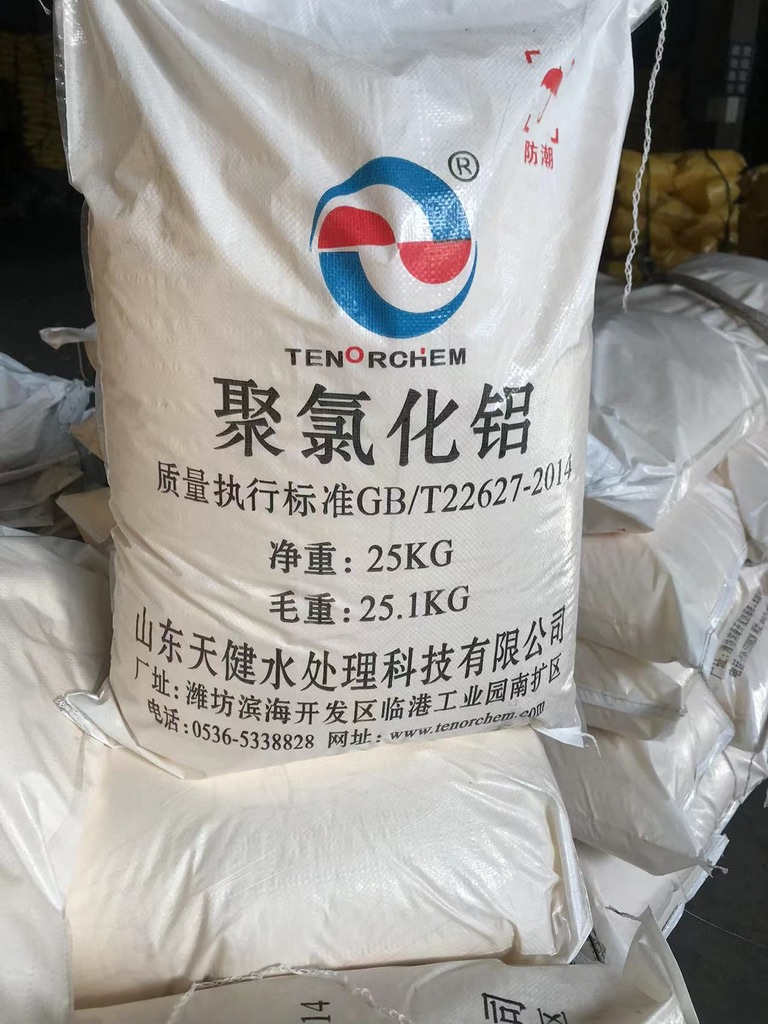
Powder · 25 kg bags
Moisture-resistant bags, with packaging material, printing and custom requirements confirmed by order.
Liquid · 1,000 L IBCs
IBC capacity is a volume. Net product weight, loading arrangement and destination are confirmed for the selected liquid model.
Sample availability, quantity and buyer-paid international courier charges are agreed before dispatch.
Storage
Keep powder dry and tightly sealed, protected from humidity and direct sunlight. Store liquid in a cool place, protected from freezing and direct sunlight; confirm shelf life for the selected model.
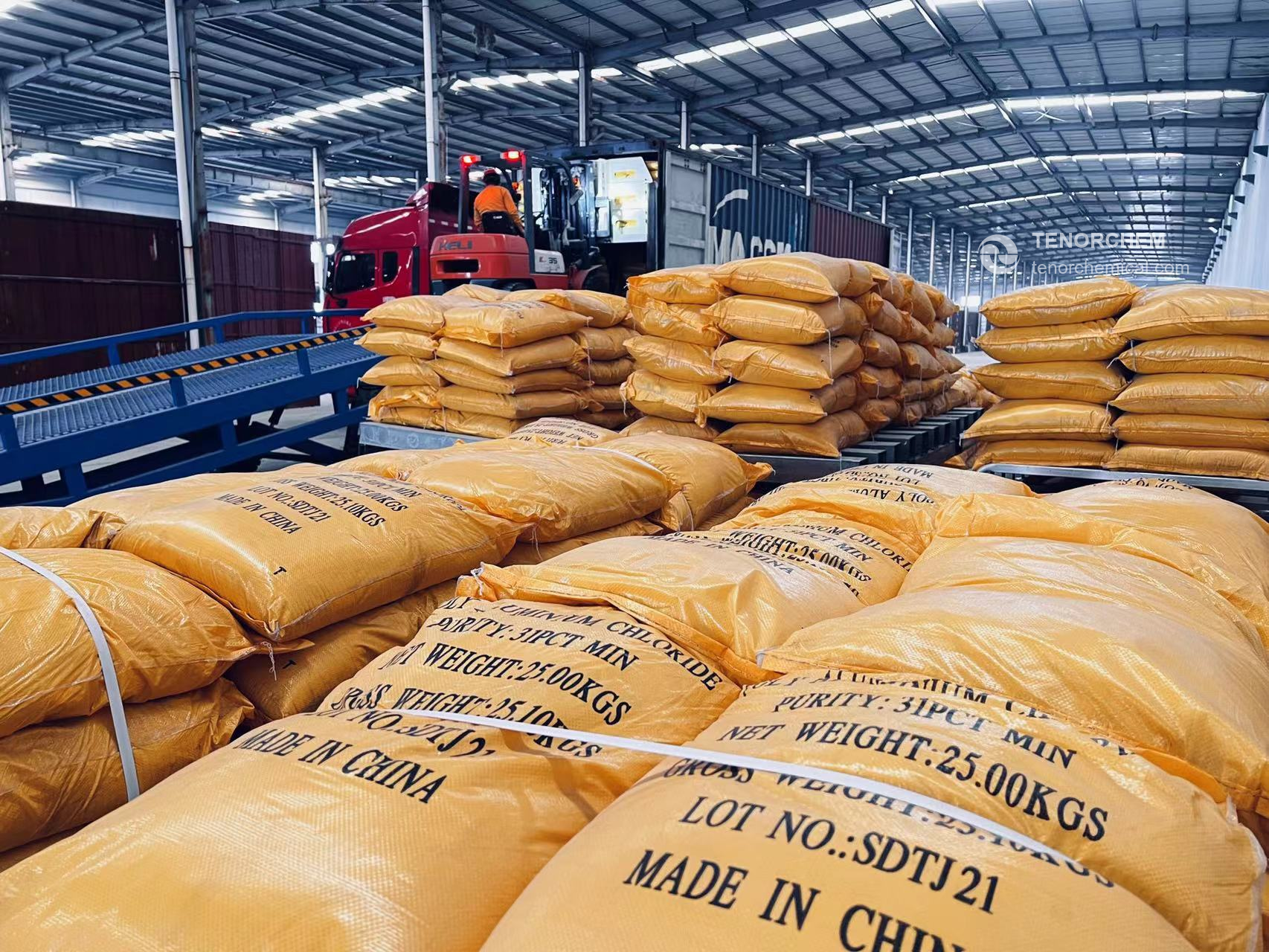
Packaging & shipment records
Common questions
What does the percentage on a PAC specification mean?
It is Al₂O₃ content. It does not mean that all products with the same percentage have the same basicity, impurity limits or treatment performance.
Can colour identify the grade?
No. Industrial samples pictured are labelled 26% and 28%, but colour alone does not establish content or suitability. Select using the grade specification and water-treatment trial.
How should I choose the dosage?
Share your raw-water data and treatment objective. Confirm the model and working dosage through a jar test; there is no single dosage suitable for every water source.
Is PAC interchangeable with PAM?
No. PAC is an inorganic coagulant, while PAM is a polymer used for flocculation and solids separation. Depending on the treatment process, they may be evaluated separately or together. Select the models and dosage through testing with your water or sludge.
Documents & inquiry
Technical data sheet (TDS)
Model parameters, test conditions and preparation guidance.
Safety data sheet (SDS)
Handling, storage and chemical identity for the specified product.
Certificate of analysis (COA)
A representative COA supports model evaluation; a batch COA records the supplied lot’s results.
For a quotation, include the selected model, application, quantity, packaging and destination.
Related products & guides
PAM · flocculation and sludge treatment
Liquid vs powder PAC: which form fits your plant? — Compare liquid and powder PAC by Al₂O₃ content, preparation equipment, storage and delivery weight. Plan a model trial before changing your treatment programme.
PAC vs PAM: choosing chemicals for water treatment — Understand PAC coagulants and PAM flocculants, compare selection parameters and prepare the water or sludge information needed for a sample trial.
25 kg bags vs big bags: choosing chemical packaging — Compare 25 kg bags and 1,000 kg big bags for chemical supply, including receiving equipment, storage, pallets, labels and product-specific availability.