What the three PAM names tell you
PAM means polyacrylamide. APAM, CPAM and NPAM identify its anionic, cationic and nonionic model families.
| Family | What to compare in the model specification |
|---|---|
| APAM · anionic | Anionic polymer family. The TENORCHEM table specifies molecular weight and degree of hydrolysis. |
| CPAM · cationic | Cationic polymer family. Compare molecular weight and ionicity for the proposed model. |
| NPAM · nonionic | Nonionic model family. Review the listed hydrolysis limit; molecular weight is confirmed for the individual model. |
All three dry-product families shown on our PAM overview have a published solid-content minimum of 90%. That does not make them interchangeable, and solid content is not a polymer-purity claim. Keep the chemical identity and model code consistent across the sample label, TDS, SDS and order.
Build the shortlist around the separation process
Anionic polymers are commonly evaluated for water clarification and process-water recycling; cationic polymers are commonly evaluated for biological-sludge dewatering. Nonionic polymers are also used in mineral-processing applications. These are starting points for discussion, not a rule that one ionic family fits every stream.
This general background is consistent with Kemira’s flocculant overview. For your sample shortlist, provide the actual water or sludge data and the separation equipment. Do not select the family solely from the industry name.
For example, a clarification inquiry should describe the feed and the required clarified-water result. A sludge-dewatering inquiry should also identify the sludge source, dry-solids content if known, and the equipment. The two inquiries need different evaluation records even if they come from the same factory.
Read the parameters without mixing their meanings
Use the separate APAM, CPAM and NPAM specification pages to compare candidate models. The published ranges cover several models; they are not one order specification.
- Hydrolysis and ionicity: the APAM and NPAM tables use degree of hydrolysis; the CPAM table uses ionicity. Preserve those labels when comparing quotations.
- Molecular weight: request the value and method for the proposed model. TENORCHEM confirms NPAM molecular weight by model and does not publish a general NPAM range.
- Dissolving time: check the model’s test and preparation conditions. A table limit alone does not define the make-up procedure for your plant.
If two quotations simply say “PAM, 90%”, ask for the ionic family and model specification before comparing their suitability or price.
Keep a trial record you can use for selection
| Record | Include in the comparison |
|---|---|
| Feed and equipment | Water or sludge source, available analysis, solids content where relevant, and separation equipment. |
| Model and preparation | Sample code, ionic family, preparation-water details, solution concentration and preparation time. |
| Dosage basis | Value and units; identify whether the amount refers to supplied product, active polymer or prepared solution. |
| Observed result | Clarification: settling and clarified-water measurements. Dewatering: cake solids, filtrate quality and throughput, where available. |
| Comparison conditions | Current model, baseline result and the conditions kept consistent between candidates. |
A dose per tonne of wet sludge cannot be compared directly with a dose per tonne of dry solids. Similarly, a prepared-solution volume needs its concentration basis. Do not use the 90% solid-content figure as an assumed active-polymer content for a conversion.
Select a model against the required operating result. If PAC is also being evaluated, keep the coagulant and polymer records separate; our PAC vs PAM guide explains their different roles.
Carry the selected model into the order
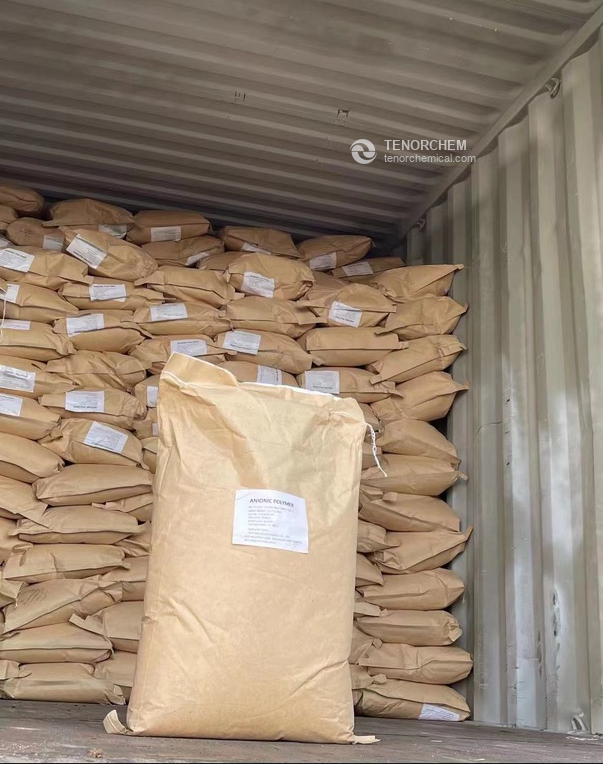
Send the trial record, selected sample code, specification requirements, order quantity and destination. Confirm preparation guidance, packaging and the matching documents before bulk supply. This keeps a successful sample evaluation connected to the product being ordered.