
Define the job before comparing products
Describe whether the job is treatment before expected icing, treatment at the start of snowfall, or snow and ice removal. Include the surface, how the area is used and the snow-clearing arrangements. Roads, pedestrian routes and port yards may need different purchasing requirements.
| Selection point | Information to provide |
|---|---|
| Surface / site | Paving material, surface condition, nearby metalwork, landscaped areas and runoff requirements. |
| Winter weather | Expected pavement temperatures, available weather information, precipitation and traffic conditions. |
| Spreading | Manual or mechanical spreading, equipment details and required particle characteristics. |
| Work schedule | Area to be treated, treatment purpose, snow-clearing schedule and access for repeat treatment. |
For airport-related work, identify the exact area and the operator’s procurement and acceptance requirements. A general road-maintenance description does not establish suitability for every airport application.
Ask what the performance claims are based on
TENORCHEM’s product is a composite salt formulation with protective additives. It should not be specified simply as calcium chloride or magnesium chloride. Ask for the selected formulation’s TDS, composition information in its SDS and the supporting reports relevant to your site.
Use the deicing salt standard-reference tables to identify the questions to ask. They refer to GB/T 23851-2017; the reference table itself is not a test report for the formulation being quoted.
- Cold-weather performance: confirm the formulation, use concentration and test conditions behind a freezing-point or low-temperature claim.
- Melting and dissolution: check which property was measured. Dissolving solid product in water is a different test from relative snow and ice melting capacity.
- Surface and environmental requirements: request relevant corrosion, friction and plant-impact evidence. Protective additives do not establish zero corrosion or unrestricted use around vegetation.
Confirm the formulation’s type and chloride category when comparing standard-based quotations. Keep the test method and comparison basis consistent between reports.
Plan a site evaluation with a usable record
The application-rate table on the product page is a reference from our Chinese product information. Use the selected model’s guidance together with actual pavement conditions; do not extend a reference temperature band into a universal application-rate promise.
For an agreed evaluation, record the model, location, surface and pavement temperature, weather, treatment purpose, applied quantity per area, application time and snow-clearing activity. Record the observed result and any site concerns before deciding the next treatment or a larger order.
This gives the supplier and maintenance team a common basis for reviewing performance. Keep the evaluation tied to the selected formulation rather than changing products and application conditions without recording the differences.
Match packaging and deliveries to the season
Available packing arrangements include 25 kg and 50 kg bags, with 1 tonne big bags discussed by order. Choose around receiving equipment, expected consumption and storage. The product is strongly hygroscopic: keep packs dry and sealed, and reseal opened bags.
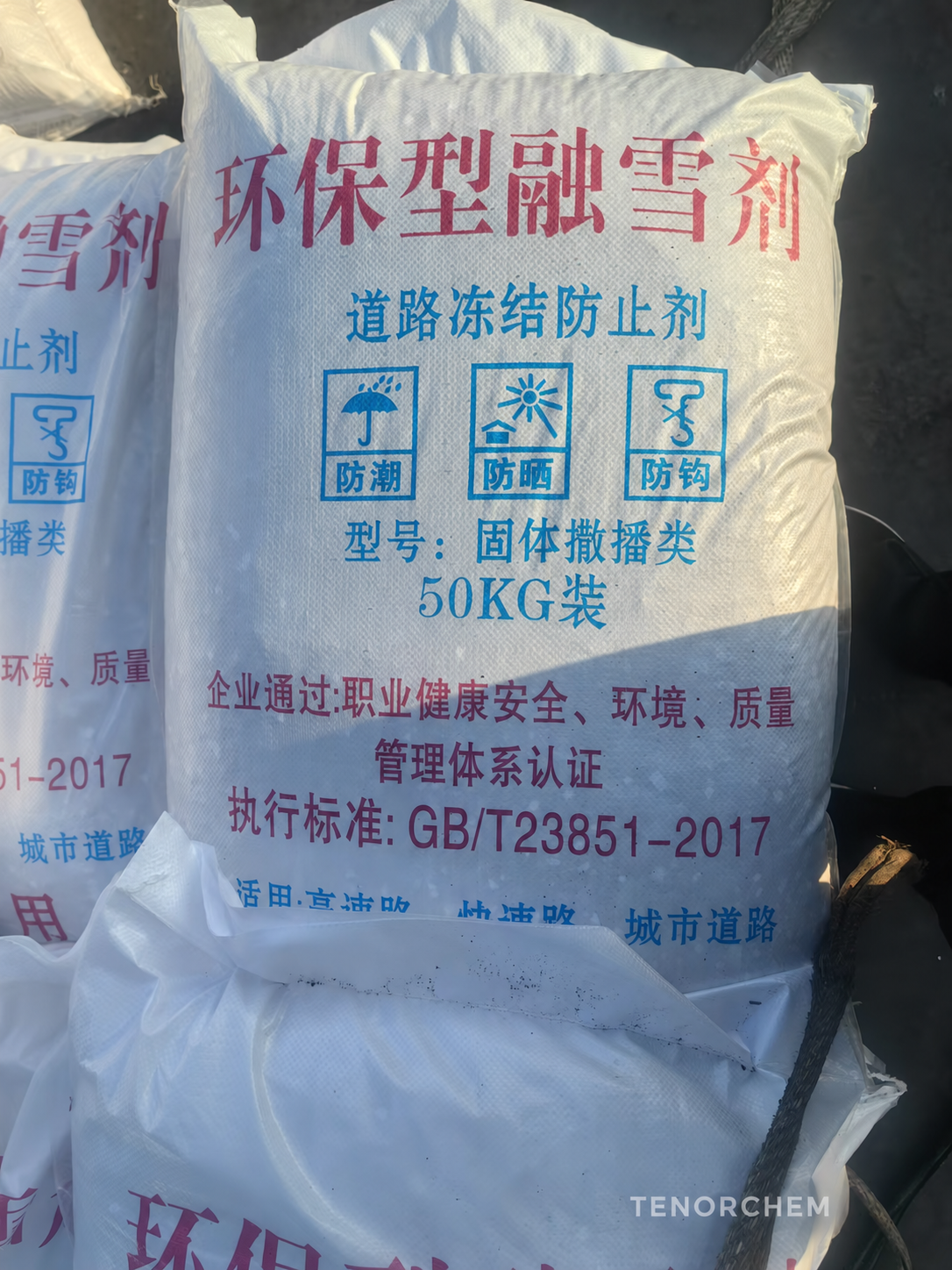
Provide the seasonal quantity, preferred delivery stages, destination and pallet requirements. For pack-handling questions, see the 25 kg bags vs big bags guide.
Turn the site brief into a quotation request
Send the site information above with the required test evidence, trial needs, packing preference and delivery plan. Ask the supplier to identify the proposed formulation and agreed specification clearly. Its supporting test reports and batch COA serve different purposes; retain both as applicable to the order.