
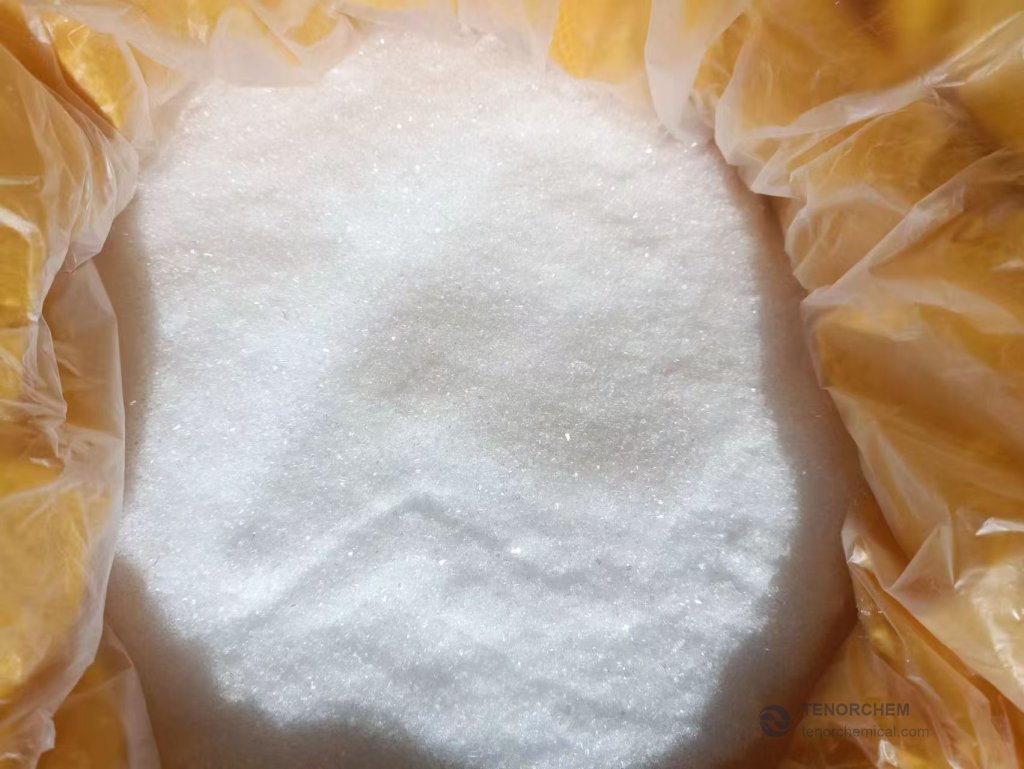
Magnesium sulfate heptahydrate crystals · actual product photograph.
Also known as magnesium sulphate heptahydrate or Epsom salt. Formula: MgSO₄·7H₂O.
Industrial standard reference
HG/T 2680-2017 is the Chinese industry standard for industrial magnesium sulfate. Type I covers the heptahydrate. The reference values below help define the required grade; the supplied model and complete specification are confirmed with the quotation and COA.
Type I · heptahydrate standard reference
| Parameter | Premium grade · standard reference | First grade · standard reference |
|---|---|---|
| MgSO₄·7H₂O content | ≥99.5% | ≥99.0% |
| Chloride, as Cl | ≤0.05% | ≤0.20% |
| Iron, as Fe | ≤0.0015% | ≤0.0030% |
| Water-insoluble matter | ≤0.01% | ≤0.05% |
| Heavy metals, as Pb | ≤0.001% | Not specified in this grade |
| pH · 50 g/L solution | 5.0–9.5 | 5.0–9.5 |
| Loss on ignition | 48.0–52.0% | 48.0–52.0% |
Industrial-standard reference values, not a batch COA. Content is expressed as MgSO₄·7H₂O. Food, feed, reagent or pharmaceutical requirements need their own applicable specifications.
HG/T 2680-2017 · official industry-standard record ↗
Applications
Textiles, leather & paper
An industrial magnesium salt for process applications. Select content, impurity limits and crystal form according to the process requirements.
Chemical processing
Discuss use as a magnesium-containing raw material, including dissolution, impurity limits and any particle-size requirements.
Magnesium-nutrient applications
For fertilizer and nutrient formulations, specify the destination market and required agricultural grade. Confirm suitability and the relevant product documents for the intended use.
Match the grade and crystal requirements
The industrial reference table reports content as MgSO₄·7H₂O. Confirm the intended-use grade separately, together with impurity limits and crystal-size acceptance criteria.
1. State the application, destination market and required grade or standard.
2. Specify MgSO₄·7H₂O content, impurity limits and desired particle size, including the acceptance method.
3. Agree sample evaluation, packing, pallet requirements and the model’s complete technical documents.
Packaging & supply
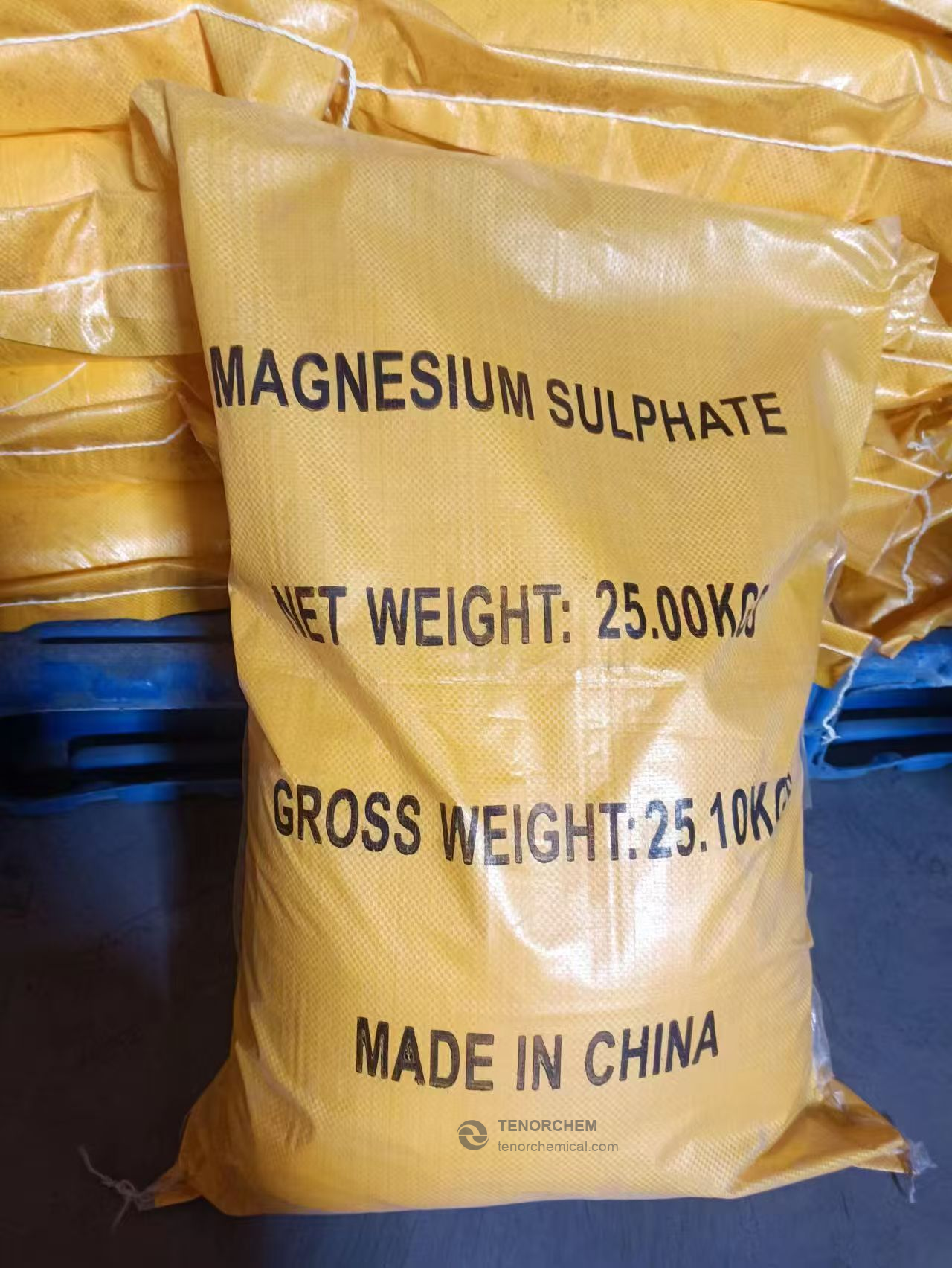
25 kg bags
25 kg net bags with an inner liner. Custom bag printing and other packing requirements are reviewed by order.
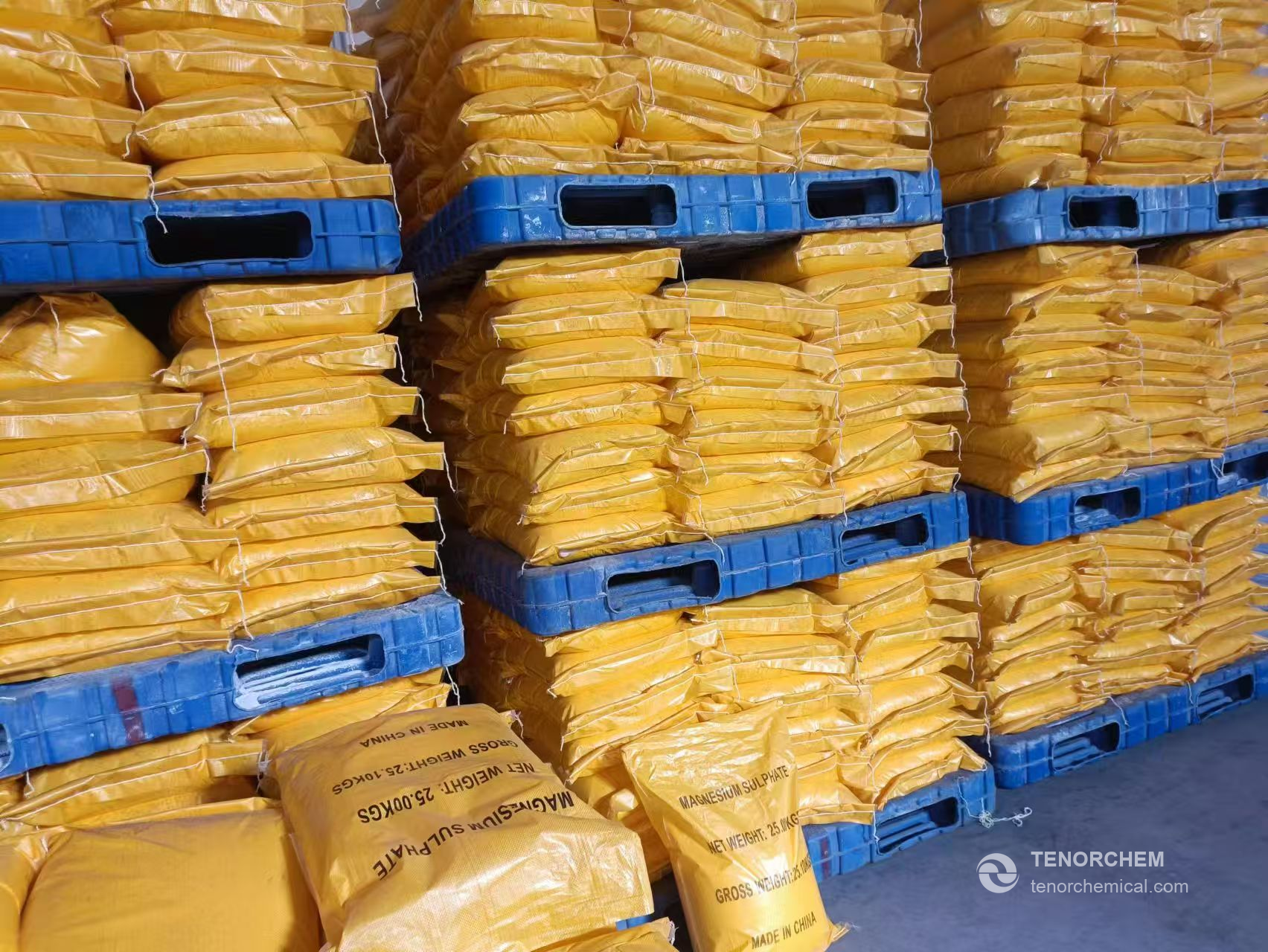
Palletized supply
Palletized bag storage and handling are shown below. Confirm export pallet type, wrapping, container loading quantity and destination when ordering.
Sample availability, quantity and buyer-paid international courier charges are agreed before dispatch.
Storage
Keep packaging closed in a cool, dry and well-ventilated place. Follow the selected product’s SDS for storage and handling.
Packed for supply.
Common questions
Which Chinese standard applies to industrial heptahydrate?
HG/T 2680-2017 covers industrial magnesium sulfate; Type I is magnesium sulfate heptahydrate. It is an industry standard, distinct from the national standard for chemical-reagent magnesium sulfate.
Does 99.5% mean anhydrous MgSO₄ content?
No. In the Type I reference table, content is expressed as MgSO₄·7H₂O, including its water of crystallization.
Can I request a particular crystal size?
Yes. Include the particle-size range and test or acceptance method in your inquiry so the appropriate product can be confirmed.
Documents & inquiry
Technical data sheet (TDS)
Model parameters, test conditions and preparation guidance.
Safety data sheet (SDS)
Handling, storage and chemical identity for the specified product.
Certificate of analysis (COA)
A representative COA supports model evaluation; a batch COA records the supplied lot’s results.
For a quotation, include the selected model, application, quantity, packaging and destination.
Related products & guides
Magnesium chloride · a different magnesium salt
Choosing magnesium sulfate heptahydrate — Select magnesium sulfate heptahydrate by intended use, hydrate content and crystal-size requirements. Agree a sample, acceptance method and export packing.
25 kg bags vs big bags: choosing chemical packaging — Compare 25 kg bags and 1,000 kg big bags for chemical supply, including receiving equipment, storage, pallets, labels and product-specific availability.