
Identify the process requirement that matters
Aluminium sulfate, also written aluminum sulfate, is used in several different processes. A useful purchasing brief explains the result you need and the constraints on the grade. Start with the application, existing product and quality issue you want to address.
| Application | What to evaluate |
|---|---|
| Water treatment | Available water analysis, treated-water target, settling and the current treatment arrangement. |
| Pulp & paper | Sizing or wet-end requirements, colour or whiteness targets, and the mill’s impurity limits. |
| Textile / process | Colour sensitivity, impurity requirements, dissolution and compatibility with the process. |
If the application has a defined acceptance specification, send that document with the inquiry. It gives the supplier and your trial team the same starting point.
Compare the limits behind the grade name
The iron-free and iron-containing grades have different iron and water-insoluble-matter limits. For colour-sensitive work, use those limits and the process trial to choose between them. “Iron-free” is a commercial grade name; the stated iron limit still applies.
Read the aluminium sulfate grade comparison for the numerical limits. Compare Al₂O₃ on the same reporting basis: it is alumina-equivalent content, rather than a percentage of aluminium sulfate purity. Include any additional impurity requirements in the agreed specification.
Ask for the selected grade’s TDS and a representative COA so the specification and test reporting can be reviewed together. A photograph is useful for discussing the form; the documents identify the grade.
Match the form to your preparation equipment
State whether you need powder or granules, together with any particle-size requirement. Describe the receiving, feeding and dissolution equipment and how the prepared solution enters your process. Confirm the available form before arranging the trial.
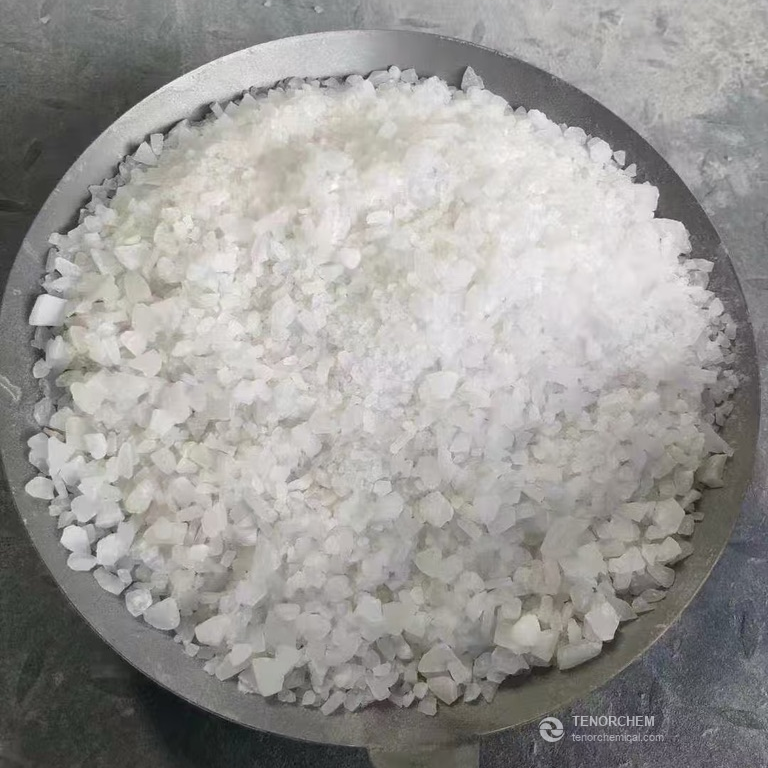
Record the sample form and preparation conditions during testing. Review dissolution and any remaining solids against your equipment and agreed limits, so a successful sample trial can be repeated with the delivered product.
Use a trial that reflects the intended application
Keep the current product as an identified comparison. Record the candidate grade, batch or sample code, preparation method, dosage basis and the process result. For paper or textile use, include the colour or quality measurements that made the grade important in the first place.
For a water-treatment comparison with PAC or PFS, use representative water and documented treatment conditions. Judge the models by the required treated-water result, settling and sludge handling. The PFS selection guide explains how to keep the iron-based comparison and dosage record clear.
Carry the selected grade into the order
Send the required grade and impurity limits, preferred form, trial observations, quantity and destination. Confirm the model documents, batch-COA requirements and label details with the quotation.
Choose the bag size and pallet arrangement around your receiving and storage setup. The chemical packaging guide covers the handling questions to ask. Keep bags closed and protected from moisture, following the selected product’s SDS.